
 Compared with traditional monocrystalline silicon photovoltaic modules, double-glass double-sided modules have the advantages of a long life cycle, low attenuation rate, weather resistance, better fire resistance, better heat dissipation, good insulation, easy cleaning and higher power generation efficiency.Why are double glass modules symmetrical?Mechanical constraints on cells: the fact that the structure of the double glass modules is symmetrical implies that the cells are located on a so-called neutral line, the upper part of the module being in compression during a downward mechanical load and the lower glass surface being in tension.
What is a dual-glass module?Dual-glass type modules (also called double glass or glass-glass) are made up of two glass surfaces, on the front and on the rear with a thickness of 2.0 mm each. Some manufacturers, in order to reduce the weight of the modules, have opted for a thickness of 1.6 mm. DualSun has chosen to stay with a thickness of 2.0 mm for reasons explained below.
What is the thickness of a glass module?The thickness of the front glass generally used for this type of structure is 3.2 mm. Dual-glass type modules (also called double glass or glass-glass) are made up of two glass surfaces, on the front and on the rear with a thickness of 2.0 mm each.
Why should you choose glass in a PV module?The choice of glass in a PV module has become a key consideration in efforts to improve durability in the face of extreme weather conditions.
What is double glass encapsulation?Hermetic encapsulation: the double glass modules offer a hermetic structure, resistant to aggressive weather conditions, the main one being moisture penetration highlighted during tests so-called Damp Heat, according to standard IEC 61215-2: 2021 (clause MQT13).
Are bifacial double-glass modules a good choice?There has been a noteable shift from the initial single-facial single-glass modules to bifacial double-glass modules. Double-glass modules, with their performance in the face of salt mist, high temperatures and high humidity, have won the market’s favour. However, this trend is not without its ris
Compared with traditional monocrystalline silicon photovoltaic modules, double-glass double-sided modules have the advantages of a long life cycle, low attenuation rate, weather resistance, better fire resistance, better heat dissipation, good insulation, easy cleaning and higher power generation efficiency.Why are double glass modules symmetrical?Mechanical constraints on cells: the fact that the structure of the double glass modules is symmetrical implies that the cells are located on a so-called neutral line, the upper part of the module being in compression during a downward mechanical load and the lower glass surface being in tension.
What is a dual-glass module?Dual-glass type modules (also called double glass or glass-glass) are made up of two glass surfaces, on the front and on the rear with a thickness of 2.0 mm each. Some manufacturers, in order to reduce the weight of the modules, have opted for a thickness of 1.6 mm. DualSun has chosen to stay with a thickness of 2.0 mm for reasons explained below.
What is the thickness of a glass module?The thickness of the front glass generally used for this type of structure is 3.2 mm. Dual-glass type modules (also called double glass or glass-glass) are made up of two glass surfaces, on the front and on the rear with a thickness of 2.0 mm each.
Why should you choose glass in a PV module?The choice of glass in a PV module has become a key consideration in efforts to improve durability in the face of extreme weather conditions.
What is double glass encapsulation?Hermetic encapsulation: the double glass modules offer a hermetic structure, resistant to aggressive weather conditions, the main one being moisture penetration highlighted during tests so-called Damp Heat, according to standard IEC 61215-2: 2021 (clause MQT13).
Are bifacial double-glass modules a good choice?There has been a noteable shift from the initial single-facial single-glass modules to bifacial double-glass modules. Double-glass modules, with their performance in the face of salt mist, high temperatures and high humidity, have won the market’s favour. However, this trend is not without its ris
Mar 5, 2015 · Using module optimization, we demonstrate that the maximum possible cost reduction benefit in $/W P of glass/backsheet modules over glass/glass modules under STC is
Get Started
Compare flexible and rigid double-glass solar panels in terms of features, performance, and applications to find the best solution for your needs.
Get Started
Aug 18, 2025 · Dual-glass type modules (also called double glass or glass-glass) are made up of two glass surfaces, on the front and on the rear with a thickness of 2.0 mm each. Some
Get Started
Feb 11, 2025 · WINAICO''s bifacial glass-glass modules are engineered to capture sunlight from both the front and rear sides, generating more energy per panel and increasing overall system
Get Started
Nov 17, 2023 · Double glass solar panels replace traditional polymer backsheets with a glass layer on the back of the module. This design encapsulates the
Get Started
Oct 19, 2022 · In contrast, the glass found in our dual glass modules is a kind of inorganic material with relatively superior weather resistance, which
Get Started
Oct 13, 2024 · Double glass solar panels offer an array of benefits over traditional single glass versions. Firstly, their durability is considerably higher, as they
Get Started
Jul 23, 2025 · While traditional solar panels dominate the market, double-glass technology is gaining traction for its superior performance in harsh
Get Started
Feb 25, 2025 · The development of TOPCon technology is speeding up the transition to bi-glass, improving the durability and moisture protection of
Get Started
A double glass (Dual Glass) solar panel is a glass-glass module structurewhere a glass layer is used on the back of the modules instead of the traditional polymer backsheet. Double glass
Get Started
Feb 5, 2025 · Additionally, the increasing focus on sustainability and the growing awareness of the benefits of bifacial double-glass modules, such as improved energy yield and durability,
Get Started
Key Advantages of Double-Glass PV Modules Weather Resistance: With no backsheet to degrade, these modules withstand extreme temperatures, humidity, and UV exposure. Higher
Get Started
Feb 21, 2025 · Key Advantages of double glass modules. Material resilience: Glass inherently resists aging, ensuring that modules maintain performance
Get Started
5 days ago · To add complexity in purchase choices for solar panels, there can be a toss-up between single and double/dual glass panels. Which is better?
Get Started
Jan 30, 2024 · Increased Energy Production One of the most significant benefits of bifacial glass-glass PV modules is their superior energy production. These
Get Started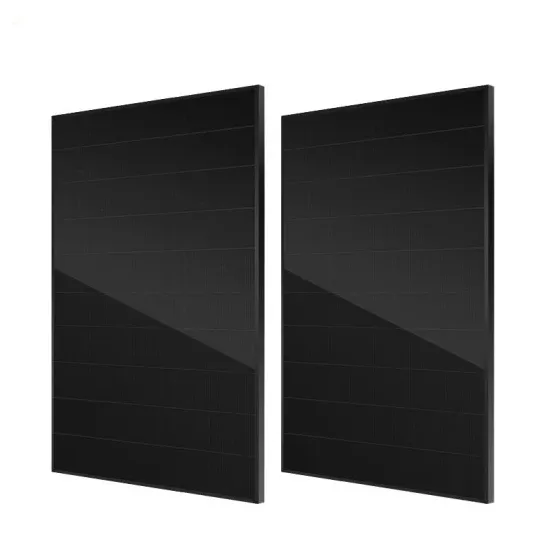
Apr 4, 2025 · The global double glass PV module market is experiencing robust growth, driven by increasing demand for high-efficiency and durable solar energy solutions. The market''s
Get Started
Sep 20, 2024 · The solar industry has introduced various technologies to optimize power generation, among which monofacial and bifacial double glass panels
Get Started
Aug 16, 2025 · Considering bifacial solar panels for your home or business? This guide explores their advantages, types, and a comparison of bifacial solar
Get Started
May 22, 2025 · The difference between double-sided double-glass n-type monocrystalline solar photovoltaic module and ordinary components is reflected in multiple dimensions, from core
Get Started
Oct 13, 2024 · 2. ADVANTAGES OF DOUBLE GLASS PANELS The adoption of double glass in solar panels results in numerous benefits that extend beyond
Get Started
6 days ago · Compared with traditional monocrystalline silicon photovoltaic modules, double-glass double-sided modules have the advantages of a long
Get Started
Apr 18, 2022 · Glass-glass module structures (Dual Glass or Double Glass) is a technology that uses a glass layer on the back of the modules instead of the
Get Started
Feb 10, 2025 · What Are the Advantages of Using Double-Glass Modules in Solar Monitoring Equipment? Solar monitoring equipment requires a reliable and long-lasting power source,
Get Started
Jul 11, 2025 · Dual-glass solar modules replace the conventional polymer backsheet with a second layer of tempered glass, creating a symmetric laminate structure. This fundamental
Get Started
Jul 11, 2023 · The debate about whether a double-glass module has a frame or no frame is a headache for all manufacturers of double-glass modules. Different design institutes, EPCs,
Get Started
May 26, 2024 · Double glass solar panels refer to a specific type of photovoltaic module designed with two layers of glass encasing the solar cells inside. 1.
Get Started
Mar 10, 2020 · Transparent backsheet can successfully decrease module weight and the difference between the glass-transparent backsheet module and the
Get Started
Oct 22, 2020 · For Raytech double-glass solar modules, there are two layers of tempered glasses covering on both sides of the solar panel. The benefits of
Get Started
Glass-glass module structures (Glass Glass or Double Glass) is a technology that uses a glass layer on the back of the modules instead of the traditional
Get Started
Sep 16, 2023 · Additionally, double-glass photovoltaic modules are heavier than single-glass modules, which can be a disadvantage for applications with weight restrictions. Advantages of
Get Started
Double-glass modules can generate electricity on both sides, so they have additional backside power generation gain than single-sided modules. In the
Get Started
Oct 2, 2024 · There has been a noteable shift from the initial single-facial single-glass modules to bifacial double-glass modules. Double-glass modules, with
Get Started
Apr 21, 2025 · The global double glass PV module market is experiencing robust growth, projected to reach $22,060 million in 2025 and maintain a Compound Annual Growth Rate
Get Started
Oct 2, 2024 · Left: a double-glass module; right, a bifacial single-glass module. The wave of industrial consolidation is growing ever more pronounced,
Get Started
Mechanical constraints on cells: the fact that the structure of the double glass modules is symmetrical implies that the cells are located on a so-called neutral line, the upper part of the module being in compression during a downward mechanical load and the lower glass surface being in tension.
Dual-glass type modules (also called double glass or glass-glass) are made up of two glass surfaces, on the front and on the rear with a thickness of 2.0 mm each. Some manufacturers, in order to reduce the weight of the modules, have opted for a thickness of 1.6 mm. DualSun has chosen to stay with a thickness of 2.0 mm for reasons explained below.
The thickness of the front glass generally used for this type of structure is 3.2 mm. Dual-glass type modules (also called double glass or glass-glass) are made up of two glass surfaces, on the front and on the rear with a thickness of 2.0 mm each.
The choice of glass in a PV module has become a key consideration in efforts to improve durability in the face of extreme weather conditions.
Hermetic encapsulation: the double glass modules offer a hermetic structure, resistant to aggressive weather conditions, the main one being moisture penetration highlighted during tests so-called Damp Heat, according to standard IEC 61215-2: 2021 (clause MQT13).
There has been a noteable shift from the initial single-facial single-glass modules to bifacial double-glass modules. Double-glass modules, with their performance in the face of salt mist, high temperatures and high humidity, have won the market’s favour. However, this trend is not without its risks.
 Single-glass bifacial and double-glass bifacial modules
 Transportation of double-glass modules
 Double-glass photovoltaic modules for export
 Monocrystalline double-glass double-sided 540 modules
 Double-glass foldable photovoltaic modules
 Which one should I choose for single-glass or double-glass photovoltaic modules
 What is the double-glass glass of photovoltaic modules
 What are the benefits of energy storage photovoltaics in Armenia
 Small Energy Storage Battery Benefits
 Peak regulation benefits of independent energy storage power stations
The global commercial and industrial solar energy storage battery market is experiencing unprecedented growth, with demand increasing by over 400% in the past three years. Large-scale battery storage solutions now account for approximately 45% of all new commercial solar installations worldwide. North America leads with 42% market share, driven by corporate sustainability goals and federal investment tax credits that reduce total system costs by 30-35%. Europe follows with 35% market share, where standardized industrial storage designs have cut installation timelines by 60% compared to custom solutions. Asia-Pacific represents the fastest-growing region at 50% CAGR, with manufacturing innovations reducing system prices by 20% annually. Emerging markets are adopting commercial storage for peak shaving and energy cost reduction, with typical payback periods of 3-6 years. Modern industrial installations now feature integrated systems with 50kWh to multi-megawatt capacity at costs below $500/kWh for complete energy solutions.
Technological advancements are dramatically improving solar energy storage battery performance while reducing costs for commercial applications. Next-generation battery management systems maintain optimal performance with 50% less energy loss, extending battery lifespan to 20+ years. Standardized plug-and-play designs have reduced installation costs from $1,000/kW to $550/kW since 2022. Smart integration features now allow industrial systems to operate as virtual power plants, increasing business savings by 40% through time-of-use optimization and grid services. Safety innovations including multi-stage protection and thermal management systems have reduced insurance premiums by 30% for commercial storage installations. New modular designs enable capacity expansion through simple battery additions at just $450/kWh for incremental storage. These innovations have improved ROI significantly, with commercial projects typically achieving payback in 4-7 years depending on local electricity rates and incentive programs. Recent pricing trends show standard industrial systems (50-100kWh) starting at $25,000 and premium systems (200-500kWh) from $100,000, with flexible financing options available for businesses.