
 How much does a glass module weigh?The weight of glass-glass modules are still an issue, with current designs using 2 mm thick glass on each side for framed modules, the weight is about 22 kg, while 2.5 mm on each side will increase the module’s weight to 23 kg. Compared to traditional glass-foil modules, which are about 18 kg, this is a 20% increase in weight.
Why is glass/glass photovoltaic (G/G) module construction so popular?Glass/glass (G/G) photovoltaic (PV) module construction is quickly rising in popularity due to increased demand for bifacial PV modules, with additional applications for thin-film and building-integrated PV technologies.
What is a glass-glass module?Glass-Glass module designs are an old technology that utilises a glass layer on the back of modules in place of traditional polymer backsheets. They were heavy and expensive allowing for the lighter polymer backsheets to gain the majority of the market share at the time.
What is the difference between tempered glass and glass-foil modules?Compared to traditional glass-foil modules, which are about 18 kg, this is a 20% increase in weight. Although there is no standard on glass thickness, in general it is a more complex and expensive process to produce very thin, tempered glass. However, 2.5 mm glass thickness does allow for frameless designs, which can reduce costs dramatically.
What changes are incorporated in glass-glass modules?Another major change that is also incorporated for glass-glass modules is swapping EVA for polyolefins as an encapsulant. This is due to the free radicals produced during the cross-linking lamination process of EVA. While traditional backsheets are somewhat permeable to the free radicals, the double-glass module is not.
How long will a glass-glass module last?Therefore. over a 30 year lifetime it can be expected to still operate at 85% of the nameplate capacity. The weight of glass-glass modules are still an issue, with current designs using 2 mm thick glass on each side for framed modules, the weight is about 22 kg, while 2.5 mm on each side will increase the module’s weight to 23
How much does a glass module weigh?The weight of glass-glass modules are still an issue, with current designs using 2 mm thick glass on each side for framed modules, the weight is about 22 kg, while 2.5 mm on each side will increase the module’s weight to 23 kg. Compared to traditional glass-foil modules, which are about 18 kg, this is a 20% increase in weight.
Why is glass/glass photovoltaic (G/G) module construction so popular?Glass/glass (G/G) photovoltaic (PV) module construction is quickly rising in popularity due to increased demand for bifacial PV modules, with additional applications for thin-film and building-integrated PV technologies.
What is a glass-glass module?Glass-Glass module designs are an old technology that utilises a glass layer on the back of modules in place of traditional polymer backsheets. They were heavy and expensive allowing for the lighter polymer backsheets to gain the majority of the market share at the time.
What is the difference between tempered glass and glass-foil modules?Compared to traditional glass-foil modules, which are about 18 kg, this is a 20% increase in weight. Although there is no standard on glass thickness, in general it is a more complex and expensive process to produce very thin, tempered glass. However, 2.5 mm glass thickness does allow for frameless designs, which can reduce costs dramatically.
What changes are incorporated in glass-glass modules?Another major change that is also incorporated for glass-glass modules is swapping EVA for polyolefins as an encapsulant. This is due to the free radicals produced during the cross-linking lamination process of EVA. While traditional backsheets are somewhat permeable to the free radicals, the double-glass module is not.
How long will a glass-glass module last?Therefore. over a 30 year lifetime it can be expected to still operate at 85% of the nameplate capacity. The weight of glass-glass modules are still an issue, with current designs using 2 mm thick glass on each side for framed modules, the weight is about 22 kg, while 2.5 mm on each side will increase the module’s weight to 23

While initial attention on tracker module failures was on 2P trackers due to torsional galloping, since 2020 there has been a growing body of reports for rear glass breakages afflicting solar
Get Started
Jul 15, 2020 · Trina Solar now distributes its PV products to over 100 countries all over the world. We are committed to building strategic, mutually bene cial collaborations with installers,
Get Started
4 days ago · Compared to traditional glass-foil modules, which are about 18 kg, this is a 20% increase in weight. Although there is no standard on glass
Get Started
6 days ago · Targray supplies solar PV glass materials engineered to enhance the conversion efficiency and power output of solar photovoltaic panels. Our
Get Started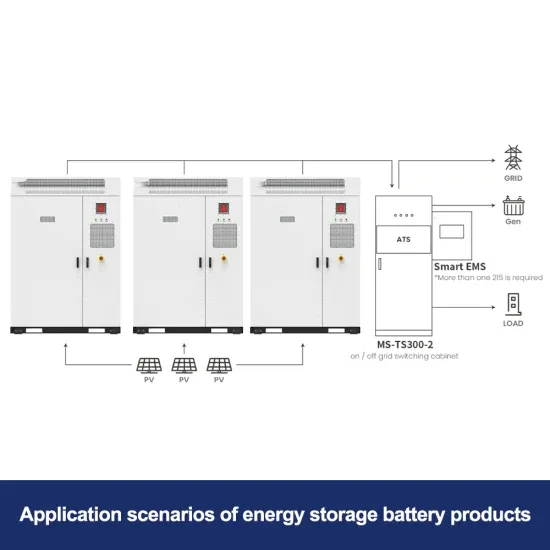
Mar 10, 2020 · Using a transparent backsheet as the encapsulation material for the rear side can keep module weight under 30kg when the module size is as large as 2.7m2, which benefits
Get Started
Nov 7, 2024 · The irradiance on the rear side will give rise to an increase of the global PV module output power. During the simulation, PVsyst simply adds the rear irradiance (weighted by the
Get Started
Feb 24, 2025 · A high breakage rate in thin PV module glass is a vulnerability that is not yet widely understood due to inadequate testing regimes.
Get Started
Jan 1, 2025 · This study highlights the critical role of tilt angle and ground reflectance when using white paint in maximizing energy output from bifacial PV modules. Within the experimental
Get Started
May 21, 2024 · Lamination process and encapsulation materials for glass–glass PV module design Gianluca Cattaneo1, Antonin Faes1, Heng-Yu Li1,2, Federico Galliano1,2, Maria
Get Started
Aug 5, 2024 · A significant increase in reported glass breakages from the field was recognized during the past three years, where a disproportionately high number of modules were affected
Get Started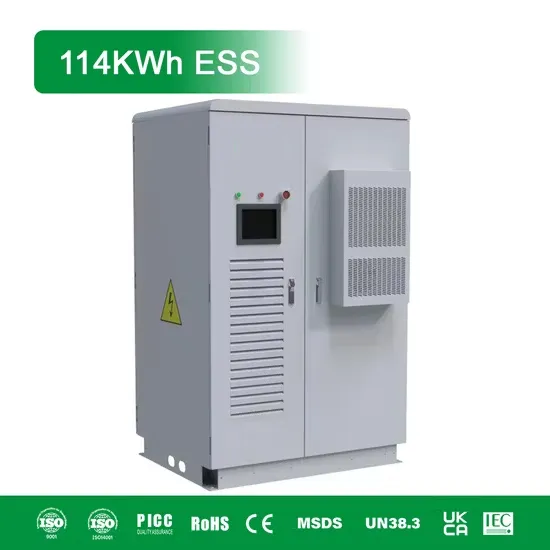
Jun 1, 2023 · Currently, glass-glass modules (~15.2 kg/m2) are about 35-40% heavier per unit area than glass-backsheet modules (~11.3 kg/m2)* Almaden advertises 2mm double glass
Get Started
Sep 27, 2023 · The monofacial double-glass photovoltaic modules are still seriously affected by the temperature effect. The coatings with spectral regulation characteristics are expected to
Get Started
The PV modules used in this paper are: a nominal 106-Wp ISOFOTON I-106 m-Si module (glass–cell–glass package) and a nominal 101-Wp Shell RMS100 p-Si (glass–cell–tedlar™
Get Started
Mar 10, 2020 · Transparent backsheet can successfully decrease module weight and the difference between the glass-transparent backsheet module and the
Get Started
Solar Glass & Mirrors Glass is used in photovoltaic modules as layer of protection against the elements. In thin-film technology, glass also serves as the substrate upon which the
Get Started
Aug 3, 2021 · New amendments to IEC 61215 standard protocols for G/G bifacial modules have also been proposed so that the rear side power generation and
Get Started
Apr 1, 2025 · The results show that the temperature decreases gradually from the center to the edge of the PV module, and the maximum temperature and the in-plane temperature
Get Started
Mar 21, 2025 · While some manufacturers are experimenting with thinner glass (e.g., 1.8 mm or 1.6 mm), these alternatives are still considered risky due to the increasing size of PV modules,
Get Started
Jan 1, 2023 · Continuous advances in the crystalline silicon photovoltaic (PV) module designs and economies of scale are driving down the cost of PV electricity and improving its reliability
Get Started
Nov 15, 2024 · The findings indicate that a low inclination installation is preferable, and a glass-glass PV module with a 2.5 mm glass thickness can withstand static and dynamic mechanical
Get Started
Glass-glass solar modules (bifacial modules) increase energy production by approximately 2% to 5% compared to traditional glass-backsheet modules,
Get Started
Nov 1, 2024 · Manufacturers have also released "hail- resistant" modules with 3.2 mm front glass and either 2 mm or 1.6 mm rear glass that can pass 50 mm,
Get Started
Nov 1, 2023 · The thermal and electrical performances of the modules applied with different coatings on the rear surfaces of PV modules were calculated to optimize the coating
Get Started
Apr 29, 2020 · The Most Comprehensive Selected Top Class Chinese Glass Machines, Products and Services Resource Glass Fabricating Machines | Glass Processing Machines | Glass
Get Started
Jan 27, 2025 · 144HC M10 SL Bifacial Module 144 Half-Cut Monocrystalline 520W – 550W 21.3% Utilizes the latest M10 size super high eficiency Monocrystalline PERC cells. Half cut design
Get Started
Sep 15, 2021 · Life Cycle Assessments (LCA) of single-crystalline silicon (sc-Si) photovoltaic (PV) systems often disregard novel module designs (e.g. glass-glass modules) and the fast pace of
Get Started
Nov 2, 2021 · Photovoltaic (PV) module prices are a key metric for PV project development and growth of the PV industry. The general trend of global PV module pricing has been a rapid and
Get Started
Oct 2, 2024 · The choice of glass in a PV module has become a key consideration in efforts to improve durability in the face of extreme weather
Get Started
The weight of glass-glass modules are still an issue, with current designs using 2 mm thick glass on each side for framed modules, the weight is about 22 kg, while 2.5 mm on each side will increase the module’s weight to 23 kg. Compared to traditional glass-foil modules, which are about 18 kg, this is a 20% increase in weight.
Glass/glass (G/G) photovoltaic (PV) module construction is quickly rising in popularity due to increased demand for bifacial PV modules, with additional applications for thin-film and building-integrated PV technologies.
Glass-Glass module designs are an old technology that utilises a glass layer on the back of modules in place of traditional polymer backsheets. They were heavy and expensive allowing for the lighter polymer backsheets to gain the majority of the market share at the time.
Compared to traditional glass-foil modules, which are about 18 kg, this is a 20% increase in weight. Although there is no standard on glass thickness, in general it is a more complex and expensive process to produce very thin, tempered glass. However, 2.5 mm glass thickness does allow for frameless designs, which can reduce costs dramatically.
Another major change that is also incorporated for glass-glass modules is swapping EVA for polyolefins as an encapsulant. This is due to the free radicals produced during the cross-linking lamination process of EVA. While traditional backsheets are somewhat permeable to the free radicals, the double-glass module is not.
Therefore. over a 30 year lifetime it can be expected to still operate at 85% of the nameplate capacity. The weight of glass-glass modules are still an issue, with current designs using 2 mm thick glass on each side for framed modules, the weight is about 22 kg, while 2.5 mm on each side will increase the module’s weight to 23 kg.
 Slovakia crystalline silicon photovoltaic module glass
 Monrovia double glass photovoltaic curtain wall size
 Mongolia photovoltaic module glass
 Monocrystalline silicon 625wP photovoltaic module size
 Russian monocrystalline photovoltaic module glass
 Rear photovoltaic glass
 Mogadishu double glass photovoltaic module price
 Dushanbe single glass photovoltaic module solar panel
 Maximum photovoltaic glass size
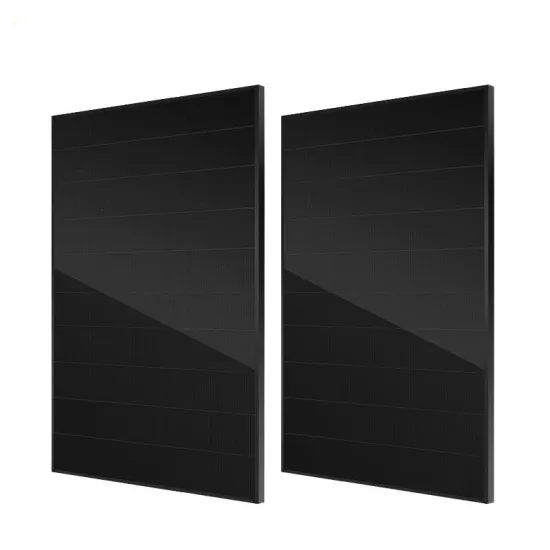 210Double-glass photovoltaic module size
The global commercial and industrial solar energy storage battery market is experiencing unprecedented growth, with demand increasing by over 400% in the past three years. Large-scale battery storage solutions now account for approximately 45% of all new commercial solar installations worldwide. North America leads with 42% market share, driven by corporate sustainability goals and federal investment tax credits that reduce total system costs by 30-35%. Europe follows with 35% market share, where standardized industrial storage designs have cut installation timelines by 60% compared to custom solutions. Asia-Pacific represents the fastest-growing region at 50% CAGR, with manufacturing innovations reducing system prices by 20% annually. Emerging markets are adopting commercial storage for peak shaving and energy cost reduction, with typical payback periods of 3-6 years. Modern industrial installations now feature integrated systems with 50kWh to multi-megawatt capacity at costs below $500/kWh for complete energy solutions.
Technological advancements are dramatically improving solar energy storage battery performance while reducing costs for commercial applications. Next-generation battery management systems maintain optimal performance with 50% less energy loss, extending battery lifespan to 20+ years. Standardized plug-and-play designs have reduced installation costs from $1,000/kW to $550/kW since 2022. Smart integration features now allow industrial systems to operate as virtual power plants, increasing business savings by 40% through time-of-use optimization and grid services. Safety innovations including multi-stage protection and thermal management systems have reduced insurance premiums by 30% for commercial storage installations. New modular designs enable capacity expansion through simple battery additions at just $450/kWh for incremental storage. These innovations have improved ROI significantly, with commercial projects typically achieving payback in 4-7 years depending on local electricity rates and incentive programs. Recent pricing trends show standard industrial systems (50-100kWh) starting at $25,000 and premium systems (200-500kWh) from $100,000, with flexible financing options available for businesses.