
 What is the difference between open and closed systems?Open systems. They are the most predominant of all, they are characterized by exchanging energy and / or matter with the environment that surrounds them, either taking it towards him and / or expelling it. Closed systems. They exchange energy (heat, work) with the outside, but never matter (their mass remains intact). Isolated systems.
What are examples of open and closed thermodynamic systems?Examples of open system: Boiler, Nuclear reactor, Combustion chamber, Turbine, Condenser, Pump, Heat exchanger, etc. All such thermodynamic systems where only energy interaction occurs between the concerned system and its surroundings are called closed systems. Thus, no mass interaction occurs between a closed system and its surroundings.
What is an open system?On the other side of the spectrum, an open system is a system that interacts with its environment. Unlike closed systems, open systems exchange matter and energy with their surroundings, allowing for a continuous flow of inputs and outputs. Open systems are prevalent in nature, ranging from ecosystems to living organisms, and even organizations.
What is the difference between closed systems and isolated systems?Closed systems. They exchange energy (heat, work) with the outside, but never matter (their mass remains intact). Isolated systems. They do not exchange energy or matter of any kind with their environment, they are considered systems disconnected from the dynamics around them.
What is an example of a closed system?Sun. If the matter that it transforms into energy is neglected, the sun is an example of a closed system, which does not exchange matter with its environment, but does exchange energy (solar radiation, sunlight, heat). Planet Earth.
What is the difference between an open system and an isolated system?An open system allows both energy and matter to move in and out, like a steam turbine or human body. A closed system allows only energy exchange but does not allow the transfer of matter, such as a piston-cylinder arrangement. An isolated system does not allow any exchange of energy or matter, like a thermos flask or the univer
What is the difference between open and closed systems?Open systems. They are the most predominant of all, they are characterized by exchanging energy and / or matter with the environment that surrounds them, either taking it towards him and / or expelling it. Closed systems. They exchange energy (heat, work) with the outside, but never matter (their mass remains intact). Isolated systems.
What are examples of open and closed thermodynamic systems?Examples of open system: Boiler, Nuclear reactor, Combustion chamber, Turbine, Condenser, Pump, Heat exchanger, etc. All such thermodynamic systems where only energy interaction occurs between the concerned system and its surroundings are called closed systems. Thus, no mass interaction occurs between a closed system and its surroundings.
What is an open system?On the other side of the spectrum, an open system is a system that interacts with its environment. Unlike closed systems, open systems exchange matter and energy with their surroundings, allowing for a continuous flow of inputs and outputs. Open systems are prevalent in nature, ranging from ecosystems to living organisms, and even organizations.
What is the difference between closed systems and isolated systems?Closed systems. They exchange energy (heat, work) with the outside, but never matter (their mass remains intact). Isolated systems. They do not exchange energy or matter of any kind with their environment, they are considered systems disconnected from the dynamics around them.
What is an example of a closed system?Sun. If the matter that it transforms into energy is neglected, the sun is an example of a closed system, which does not exchange matter with its environment, but does exchange energy (solar radiation, sunlight, heat). Planet Earth.
What is the difference between an open system and an isolated system?An open system allows both energy and matter to move in and out, like a steam turbine or human body. A closed system allows only energy exchange but does not allow the transfer of matter, such as a piston-cylinder arrangement. An isolated system does not allow any exchange of energy or matter, like a thermos flask or the univer
This paper analyses and compares the open- and closed-loop trackers of a solar PV system. The obtained experimental results are to validate the effectiveness of each tracker. This output
Get Started
May 11, 2025 · What''s the Difference Between Open and Closed Systems? A Deep Dive Understanding the difference between open and closed systems is crucial in various fields,
Get Started
In summer solar energy can be used to separate the adsorbed water from the absorbent. Compared with closed cycles, open storage systems have an easier process design which
Get Started
Download scientific diagram | 6: Operational principles of hybrid open-loop/closed-loop motion control. from publication: Automatic positioner and control system for a motorized parabolic
Get Started
The book includes high interest topics such as solar collectors, solar water heating, solar space heating and cooling, industrial process heat, solar desalination, photovoltaic technology, solar
Get Started
Mar 9, 2025 · The difference between an open system, closed system, and isolated system is based on how they exchange energy and matter with their surroundings.
Get Started
Mar 9, 2025 · The difference between an open system, closed system, and isolated system is based on how they exchange energy and matter with their surroundings. An open system
Get Started
Jan 9, 2025 · Open and closed systems are two fundamental concepts in thermodynamics, chemistry, and other scientific disciplines. An open system exchanges both energy and matter
Get Started
This study explores the advantages of combining variable renewable energy sources like solar and wind with a pumped storage hydroelectric (PSH)
Get Started
Jan 1, 2012 · 8th IFAC Symposium on Advanced Control of Chemical Processes The International Federation of Automatic Control Singapore, July 10-13, 2012 Control of Solar Energy Systems
Get Started
Jan 1, 1984 · We have compared the output hot water temperatures from closed and open solar thermal systems. In this investigation, an equation has been derived which will enable one to
Get Started
Apr 12, 2023 · An isolated system is a thermodynamic system that does not exchange energy or matter with its surroundings (quite the opposite of an
Get Started
Answer: The main difference between an open and closed system is the ability to exchange matter with the surroundings. Open systems allow both matter and energy to be exchanged
Get Started
Sep 11, 2019 · Examples of open system: Boiler, Nuclear reactor, Combustion chamber, Turbine, Condenser, Pump, Heat exchanger, etc. All such
Get Started
Publishes original research papers of permanent interest in all areas of solar energy and energy conservation as well as discussions of policy and regulatory issues that affect renewable
Get Started
Jan 1, 2014 · The aim of this paper is to compare two solar heating systems with different solid sorption storage concepts; an open storage concept with material transport and external
Get Started
May 27, 2025 · Closed systems do not exchange matter, only energy, while open systems allow both energy and mass to cross boundaries. Earth is primarily an open system for energy,
Get Started
Sep 21, 2024 · Discover the key differences between open vs closed systems, exploring their impact on efficiency, adaptability, and control. Learn how open systems foster innovation
Get Started
Study with Quizlet and memorise flashcards containing terms like What is an Open System?, What is a Closed System, Give an example of a Open System and others.
Get Started
Open systems can be defined as the systems that are capable of transmitting and receiving mass as well as energy into and from the surroundings respectively.
Get Started
Dec 10, 2014 · Conversely, the boundary of a ''closed system'' is impermeable to matter, i.e. the refrigerator with the door closed. The analysis of a closed
Get Started
Feb 20, 2020 · The physics and engineering of photovoltaic conversion, technologies and systems Arno HM Smets Klaus Jäger Olindo Isabella René ACMM van Swaaij Miro Zeman
Get Started
Closed System vs. Isolated System What''s the Difference? Closed system and isolated system are both concepts used in thermodynamics to describe the flow of energy and matter within a
Get Started
May 30, 2024 · What is a closed system in physics example? An example of a closed system on the earth is a cup of tea with a lid on it. The only transfer of energy takes place with the
Get Started
Sep 11, 2019 · All such thermodynamic systems where both the mass interaction and energy interaction occur between the concerned system and its
Get Started
Real-world applicability: Open systems are more common in the real world, while closed systems are often used in theoretical models and experiments.
Get Started
Jun 15, 2011 · This is the question of how gradually to shift out of the fossil-fuel-based closed energy system to a solar power-based open system. We write as laymen in the hope of
Get Started
Open systems. They are the most predominant of all, they are characterized by exchanging energy and / or matter with the environment that surrounds them,
Get Started
May 8, 2025 · A Deep Dive The terms "closed system" and "open system" are frequently encountered across diverse fields, from thermodynamics and ecology to computer science
Get Started
Nov 7, 2024 · Understanding open and closed systems is crucial for mastering energy concepts in the AP Physics exam. These systems define how energy
Get Started
The objective of the Closed Loop Efficiency Analysis (CLEA) Project at Sandia National Laboratories is to develop the data base, the calculational tools, and the operational
Get Started
Sep 17, 2022 · What is closed system? A closed system is a natural physical system that does not allow transfer of matter in or out of the system, although
Get Started
Open systems. They are the most predominant of all, they are characterized by exchanging energy and / or matter with the environment that surrounds them, either taking it towards him and / or expelling it. Closed systems. They exchange energy (heat, work) with the outside, but never matter (their mass remains intact). Isolated systems.
Examples of open system: Boiler, Nuclear reactor, Combustion chamber, Turbine, Condenser, Pump, Heat exchanger, etc. All such thermodynamic systems where only energy interaction occurs between the concerned system and its surroundings are called closed systems. Thus, no mass interaction occurs between a closed system and its surroundings.
On the other side of the spectrum, an open system is a system that interacts with its environment. Unlike closed systems, open systems exchange matter and energy with their surroundings, allowing for a continuous flow of inputs and outputs. Open systems are prevalent in nature, ranging from ecosystems to living organisms, and even organizations.
Closed systems. They exchange energy (heat, work) with the outside, but never matter (their mass remains intact). Isolated systems. They do not exchange energy or matter of any kind with their environment, they are considered systems disconnected from the dynamics around them.
Sun. If the matter that it transforms into energy is neglected, the sun is an example of a closed system, which does not exchange matter with its environment, but does exchange energy (solar radiation, sunlight, heat). Planet Earth.
An open system allows both energy and matter to move in and out, like a steam turbine or human body. A closed system allows only energy exchange but does not allow the transfer of matter, such as a piston-cylinder arrangement. An isolated system does not allow any exchange of energy or matter, like a thermos flask or the universe.
 Egypt Wind and Solar Energy Storage Civil Engineering Project
 Chisinau new solar energy systems for sale
 How much electricity does 10 watts of solar energy generate
 Solar energy storage system components
 Which solar photovoltaic energy storage cabinet station is the best
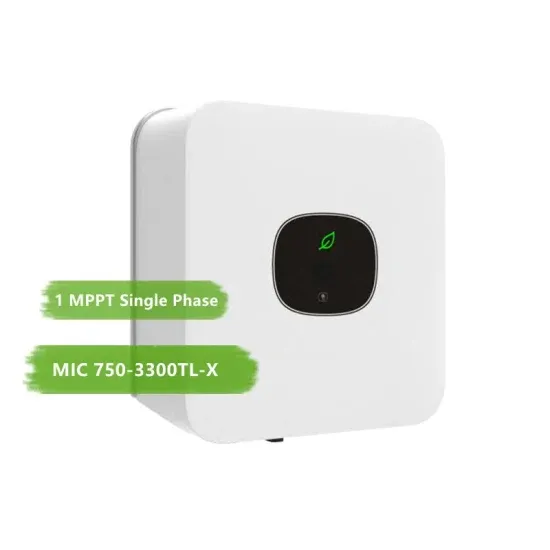 Majuro Solar Energy Storage System Price
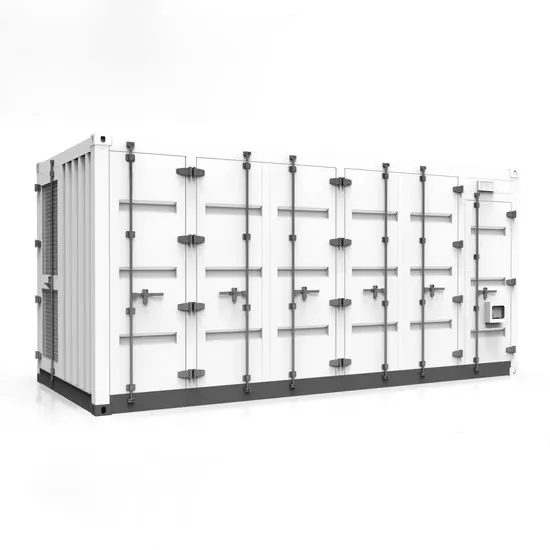 Solar power generation system kit for new energy
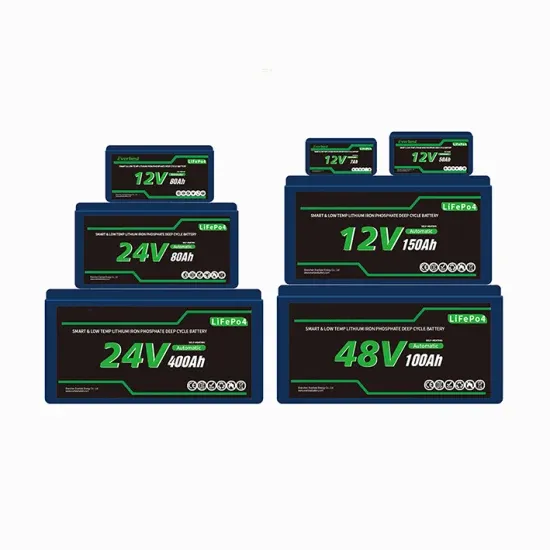 Energy storage of solar cells
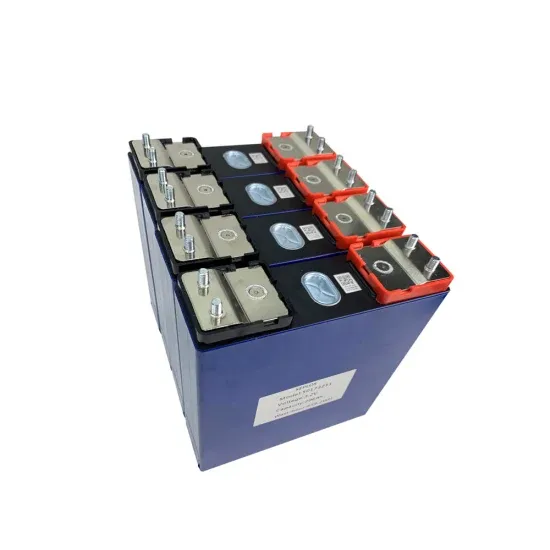 Wind and solar power generation energy storage efficiency
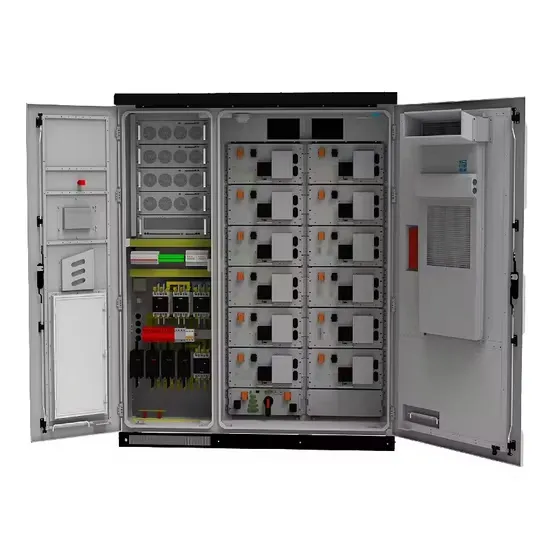 Libya wind and solar energy storage power station
The global commercial and industrial solar energy storage battery market is experiencing unprecedented growth, with demand increasing by over 400% in the past three years. Large-scale battery storage solutions now account for approximately 45% of all new commercial solar installations worldwide. North America leads with 42% market share, driven by corporate sustainability goals and federal investment tax credits that reduce total system costs by 30-35%. Europe follows with 35% market share, where standardized industrial storage designs have cut installation timelines by 60% compared to custom solutions. Asia-Pacific represents the fastest-growing region at 50% CAGR, with manufacturing innovations reducing system prices by 20% annually. Emerging markets are adopting commercial storage for peak shaving and energy cost reduction, with typical payback periods of 3-6 years. Modern industrial installations now feature integrated systems with 50kWh to multi-megawatt capacity at costs below $500/kWh for complete energy solutions.
Technological advancements are dramatically improving solar energy storage battery performance while reducing costs for commercial applications. Next-generation battery management systems maintain optimal performance with 50% less energy loss, extending battery lifespan to 20+ years. Standardized plug-and-play designs have reduced installation costs from $1,000/kW to $550/kW since 2022. Smart integration features now allow industrial systems to operate as virtual power plants, increasing business savings by 40% through time-of-use optimization and grid services. Safety innovations including multi-stage protection and thermal management systems have reduced insurance premiums by 30% for commercial storage installations. New modular designs enable capacity expansion through simple battery additions at just $450/kWh for incremental storage. These innovations have improved ROI significantly, with commercial projects typically achieving payback in 4-7 years depending on local electricity rates and incentive programs. Recent pricing trends show standard industrial systems (50-100kWh) starting at $25,000 and premium systems (200-500kWh) from $100,000, with flexible financing options available for businesses.